

Solar Power Systems in Pakistan
Pakistan’s solar adoption is rising. This blog compares on-grid, off-grid, and hybrid systems to help users choose cost-effective and reliable solar solutions.
SOLAR POWER SYSTEMS IN PAKISTAN: A Friendly Comparison.
Author Name: Kashaf Mashood Siddiqui
Empower Gen, Research Team.
Department of Electrical Engineering, NED University of Engineering and Technology
Over the past few years, solar energy in Pakistan has quietly moved from being a luxury option to a practical everyday solution. Rising electricity bills, repeated load shedding, and voltage instability have pushed households and businesses to look for alternatives. With sunlight available for most of the year, solar power fits Pakistan’s climate and economic realities well.
This blog compares four commonly used solar systems in Pakistan: on grid, off grid, grid tied, and hybrid, explained in simple language with real local context [3].
Pakistan’s Solar Landscape (Quick Facts)
Pakistan’s net-metered solar capacity crossed 4 gigawatts by the end of 2024, a sharp increase compared to just a few years ago. This growth is largely driven by higher electricity tariffs and falling solar equipment prices [3], [4].
What These Terms Really Mean
Before looking at costs and system choices, it helps to clearly understand how each solar system works.
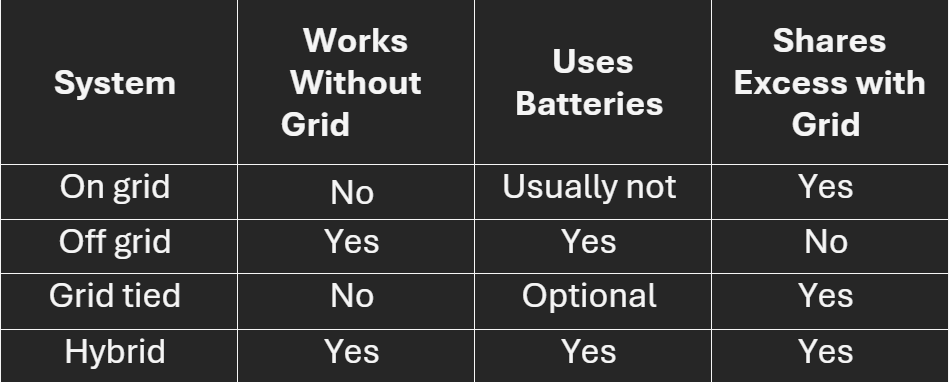
This simple comparison shows how each system handles electricity generation, storage, and interaction with the national grid [1].
ON-GRID SOLAR IN PAKISTAN/GRID-TIED SOLAR: Simple and Cost-Focused
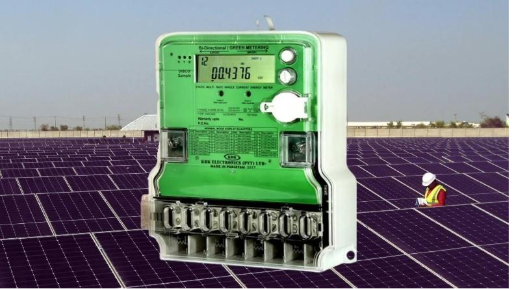
[This picture shows net metering of on-grid solar
via static energy meter. It is taken from kbk ]
How It Works:
An on-grid/ grid-tied solar system is connected directly to WAPDA or K- Electric. During daylight hours, solar panels supply electricity to the home. Any unused electricity is exported to the grid through net metering, while grid electricity is used at night or during cloudy periods [2].
Why Many Pakistanis Prefer It:
On-grid/ grid-tied systems are popular in cities like Lahore, Islamabad, and Karachi because they significantly reduce electricity bills. Many users see their monthly bills drop sharply after installation due to net-metering credits [1], [3].
Important limitations:
During load shedding, the system automatically shuts down for safety unless a separate backup system is installed [2].
According to Pakistan’s Power Division, around 466,000 consumers have installed on-grid or grid-tied solar systems in the country.
OFF-GRID SOLAR: Complete Independence
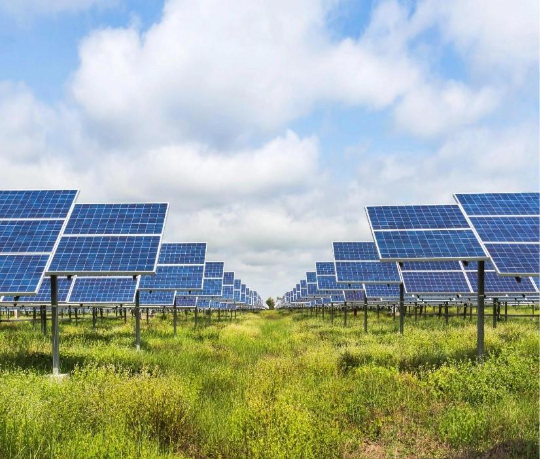
[This picture shows solar field or off grid solars.
It is taken from Vodafone ]
How It Works:
Off-grid solar systems are not connected to the national grid. All electricity produced is either used immediately or stored in batteries for later use [1].
Where It Is Common:
These systems are widely used in remote villages, agricultural lands, and areas where grid electricity is unreliable or unavailable. Users do not receive electricity bills, but they must carefully manage battery usage [1].
Key Drawback:
Battery banks increase the initial cost and require replacement every few years, raising long-term expenses [4].
Estimates from the Power Planning and Monitoring Company (PPMC) suggest that off-grid solar capacity (12–14 GW) serves millions of users nationwide.
HYBRID SOLAR: Best Of Both Worlds
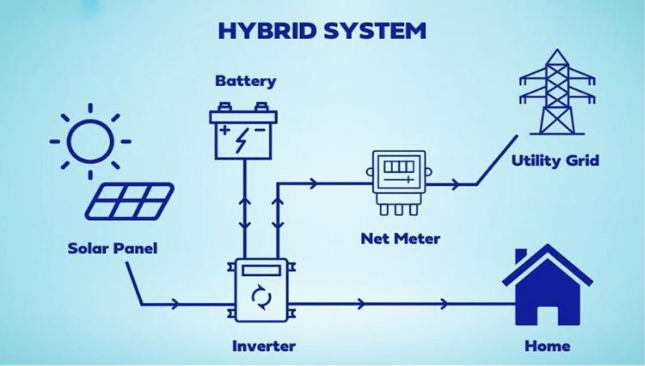
[This picture is showing the working of Hybrid system.
It is taken from 'CELLSOL energy' ]
How Hybrid Systems Work:
Hybrid solar systems combine solar panels, batteries, and grid connectivity. In everyday use:
Solar panels run appliances during the day
Extra electricity charges batteries
If solar and batteries are insufficient, the grid supplies power
This setup provides electricity during load shedding while still allowing users to benefit from net metering [1], [2].
Hybrid systems are becoming increasingly popular in Pakistan due to frequent outages and rising electricity tariffs [3].
There are no exact official statistics for hybrid solar users in Pakistan, but energy analysts estimate that hundreds of thousands of recent rooftop installations are hybrid systems
PAKISTAN SOLAR COST COMPARISON
Bar Chart Insight: Average Cost of 10 kW Solar Systems (PKR)

These estimates represent average market prices for a 10 kW system, including panels, inverter, installation, and basic components [1], [4].
To get saved from panel scams click on these given YouTube links;
CONCLUSION: Choosing the Right Solar System
On-Grid Solar suits households focused on bill reduction with stable grid access [1].
Off-Grid Solar works best in remote locations with no reliable electricity supply [4].
Grid-Tied Solar is essentially the same as on-grid solar in Pakistan [2].
Hybrid Solar offers the most balanced solution for users who want both savings and backup power [1], [3].
Understanding the differences between these systems helps consumers make smarter decisions about cost, reliability, and energy independence. To navigate these changes, Empower Gen provides the expertise needed to maximize energy independence. Empower Gen make sure that you secure a sustainable, cost-effective future despite evolving regulations. If you still want to know more you can visit the given link.
https://youtu.be/s4PjmmT6A2E?si=ThMExpxNBzwj0RuZ
References (IEEE Style) [1] Solar System Costs in Pakistan: 5 kW to 15 kW, SolarRequired.com, accessed Feb. 2026.
[2] Net Metering FAQs (Pakistan 2025), Net-Meterings.com, accessed Feb. 2026.
[3] Pakistan’s Solar Capacity Hits 4 GW, PV-Magazine, Mar. 2025.
[4] Solar Panel Prices and Costs in Pakistan 2025–2026, GravityPK.com, accessed Dec. 2025